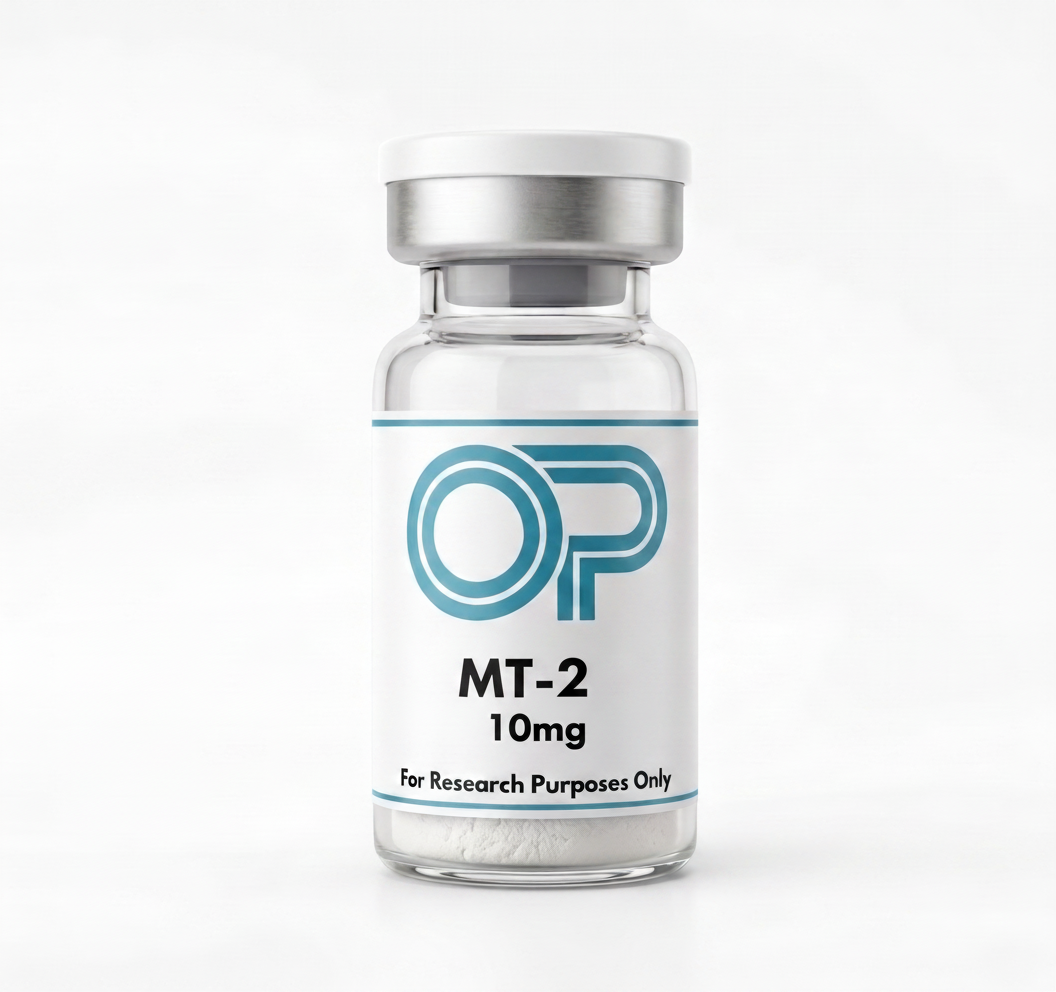
Melanotan 2 · MC1R / MC3R / MC4R Agonist
MT-2 (Melanotan 2) is a synthetic cyclic heptapeptide analogue of endogenous alpha-melanocyte-stimulating hormone (α-MSH). It acts as a broad-spectrum melanocortin receptor agonist with activity at MC1R, MC3R, and MC4R subtypes. Originally developed at the University of Arizona as a potential photoprotective and tanning agent, MT-2 has since become a widely-used research tool for investigating melanogenesis, appetite regulation, energy homeostasis, and autonomic nervous system function.
MT-2 is a synthetic, cyclic, lactamised analogue of alpha-melanocyte-stimulating hormone (α-MSH), a naturally-occurring tridecapeptide produced in the pituitary gland. The cyclic modification of the linear α-MSH sequence confers significantly enhanced metabolic stability and receptor binding affinity compared to the native hormone. MT-2 acts as a potent, non-selective melanocortin receptor agonist with demonstrated activity at MC1R, MC3R, and MC4R.
The melanocortin system regulates a diverse array of physiological processes, making MT-2 a valuable research tool across multiple disciplines. MC1R activation in melanocytes stimulates melanogenesis - the production of eumelanin (brown-black pigment) over phaeomelanin (red-yellow), providing a mechanistic model for studying UV-independent skin darkening and photoprotection. MC4R activation in the hypothalamus is associated with appetite suppression, increased energy expenditure, and autonomic nervous system modulation.
MT-2 has been investigated across a broad spectrum of research applications since its synthesis in the early 1990s. Key areas of scientific investigation include:
MT-2 is a non-selective melanocortin receptor agonist with documented activity at MC1R (pigmentation), MC3R (energy homeostasis and inflammation), and MC4R (appetite and autonomic function). It has lower affinity for MC2R (ACTH receptor) and MC5R (exocrine gland function).
MT-2 is a cyclic, lactamised analogue of α-MSH with substantially greater metabolic stability and receptor binding potency. The cyclisation of the peptide backbone prevents enzymatic degradation, resulting in a significantly extended duration of action compared to the native linear tridecapeptide.
Yes. A CoA documenting batch purity and specifications is available for every batch on request. Please contact us with your order reference number.