RESEARCH USE ONLY - Not for human or veterinary use. Supplied for lawful in vitro research and qualified laboratory investigation only. QUALITY - Peptide catalogue items are specified at ≥99% purity with batch documentation. Store lyophilised powders as directed before reconstitution. COMPLIANCE - You are responsible for lawful purchase, possession, and use in your jurisdiction, including institutional and safety requirements. SAFE HANDLING - Use trained personnel, appropriate PPE, and aseptic technique. Do not ingest, inject, or use outside a controlled research setting. POLICIES & ORDERS - Shipping, returns, and research-use terms apply to every order. Read our Research Use Policy and footer legal links before buying.
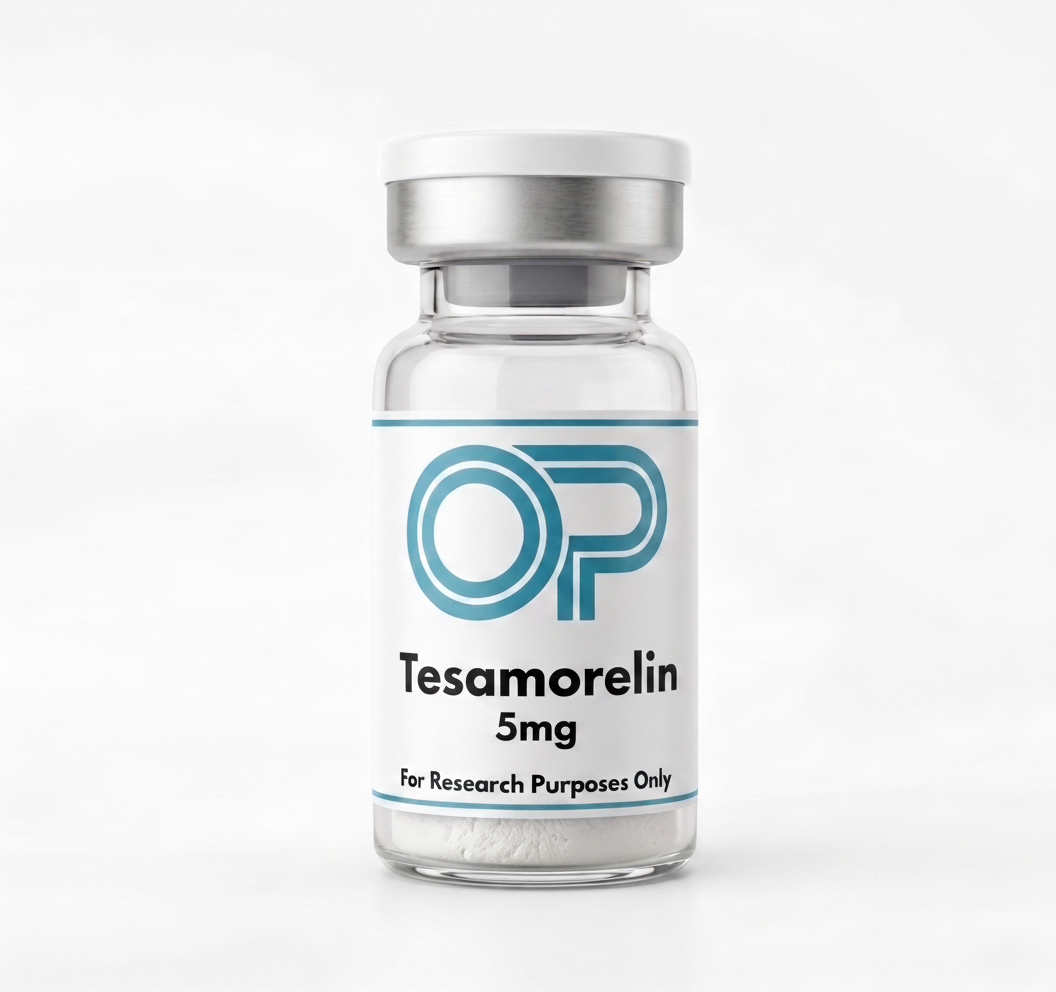
Tesamorelin 5mg lyophilised vial - for research purposes only
Purity
≥99%
Format
Lyophilised
Size
5mg
Storage
−20°C
Out of stock
GHRH analogue · Secretagogue research

Tesamorelin — GHRH Analogue

Growth hormone–releasing hormone (1-44) analogue · 5mg lyophilised

≥99% Purity
CoA on release

Tesamorelin is a stabilized GHRH analogue studied in clinical and preclinical literature for pituitary GH axis endpoints. Supplied strictly for licensed research use.

This SKU is currently unavailable.

Browse other products →

What is Tesamorelin?

Tesamorelin is a synthetic analogue of human growth hormone–releasing hormone (GHRH(1-44)) with amino-acid substitutions and stabilising modifications that increase resistance to proteolysis. In appropriate in-vivo and ex-vivo models, GHRH analogues bind the GHRH receptor on pituitary somatotrophs and stimulate pulsatile growth hormone (GH) release, downstream IGF-1 synthesis in the liver, and a coordinated neuroendocrine response.

Clinical literature has extensively studied tesamorelin in specific regulated indications; Optimus Peptides does not supply peptides for clinical use. Our material is intended only for qualified laboratory investigation of GH-axis physiology, receptor pharmacology, and related metabolic readouts.

Product Code
Tesamorelin
Target
GHRH receptor (pituitary)
Approx. Molecular Mass
~3.4 kDa
Presentation
5mg lyophilised vial
Research Focus
GH axis · neuroendocrine models

Research Background

GHRH analogues are classic tools in endocrine physiology. Published work with tesamorelin and related peptides includes:

  • Characterisation of GH pulse amplitude, frequency, and IGF-1 feedback loops in human and animal models (where ethically and legally permitted).
  • Studies on visceral adiposity and lipid kinetics in HIV-associated lipodystrophy cohorts - clinical context only; not an indication for research-grade supply.
  • Exploration of hepatic steatosis and cardiometabolic markers as secondary readouts in controlled trials.
  • Bench research on GHRH receptor signalling, cAMP coupling, and somatostatin antagonism pathways.

Research Applications

  • Pituitary explant or primary somatotroph cultures measuring GH secretagogue response
  • Comparative pharmacology versus GHRP-family secretagogues (e.g. Ipamorelin) or GHRH fragments
  • Metabolic phenotyping in rodent models of GH deficiency or excess (IACUC-approved)

Technical Specifications

Appearance
White lyophilised powder
Purity
≥99% (HPLC specification)
Format
Lyophilised (freeze-dried)
Net Mass
5mg peptide per vial (label)
Reconstitution
Bacteriostatic or sterile water per protocol
Storage (Lyophilised)
−20°C, desiccated, protect from light
Storage (Reconstituted)
2–8°C; aliquot to avoid repeated warming
Shelf Life
Refer to batch label (lyophilised)
CoA
Available on request per batch

Frequently Asked Questions

Is this the same tesamorelin used in prescription products?

We sell research-grade material only. Identity and purity are documented on CoA, but this listing is not a medicine, is not licensed for therapy, and must not be used as a drug substitute.

How does tesamorelin differ from CJC-1295?

Tesamorelin is a stabilised GHRH(1-44)-class analogue. CJC-1295 (without DAC) is a modified GHRH(1-29) fragment with different pharmacokinetics. Choose based on your protocol and receptor pharmacology needs.

Can I combine it with Ipamorelin in a study?

Some preclinical designs stack GHRH-pathway ligands with ghrelin-receptor secretagogues to probe additive GH release. Any combination must be justified scientifically and approved under your local animal or biosafety rules.

When will stock return?

Use the notify button on this page to join the restock mailing list.