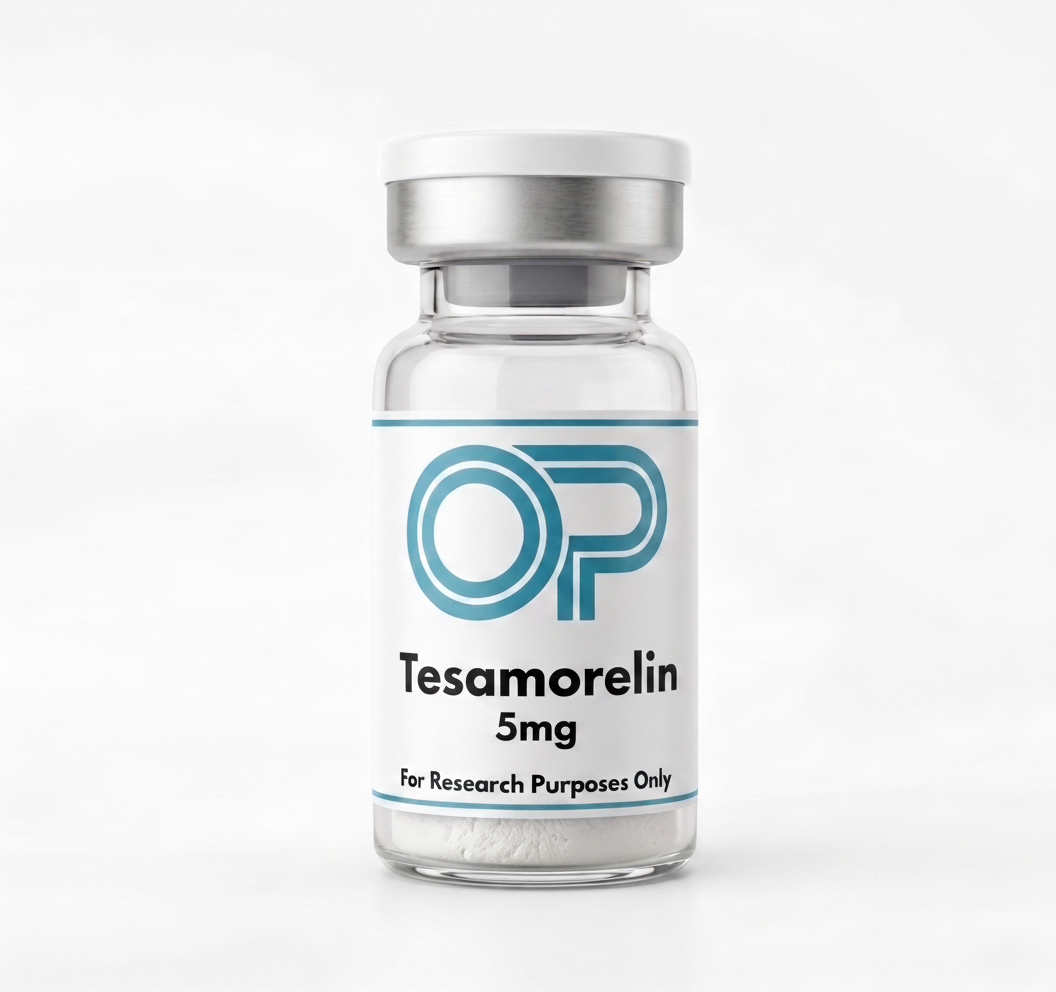
Growth hormone–releasing hormone (1-44) analogue · 5mg lyophilised
Tesamorelin is a stabilized GHRH analogue studied in clinical and preclinical literature for pituitary GH axis endpoints. Supplied strictly for licensed research use.
This SKU is currently unavailable.
Browse other products →Tesamorelin is a synthetic analogue of human growth hormone–releasing hormone (GHRH(1-44)) with amino-acid substitutions and stabilising modifications that increase resistance to proteolysis. In appropriate in-vivo and ex-vivo models, GHRH analogues bind the GHRH receptor on pituitary somatotrophs and stimulate pulsatile growth hormone (GH) release, downstream IGF-1 synthesis in the liver, and a coordinated neuroendocrine response.
Clinical literature has extensively studied tesamorelin in specific regulated indications; Optimus Peptides does not supply peptides for clinical use. Our material is intended only for qualified laboratory investigation of GH-axis physiology, receptor pharmacology, and related metabolic readouts.
GHRH analogues are classic tools in endocrine physiology. Published work with tesamorelin and related peptides includes:
We sell research-grade material only. Identity and purity are documented on CoA, but this listing is not a medicine, is not licensed for therapy, and must not be used as a drug substitute.
Tesamorelin is a stabilised GHRH(1-44)-class analogue. CJC-1295 (without DAC) is a modified GHRH(1-29) fragment with different pharmacokinetics. Choose based on your protocol and receptor pharmacology needs.
Some preclinical designs stack GHRH-pathway ligands with ghrelin-receptor secretagogues to probe additive GH release. Any combination must be justified scientifically and approved under your local animal or biosafety rules.
Use the notify button on this page to join the restock mailing list.