RESEARCH USE ONLY - Not for human or veterinary use. Supplied for lawful in vitro research and qualified laboratory investigation only.·QUALITY - Peptide catalogue items are specified at ≥99% purity with batch documentation. Store lyophilised powders as directed before reconstitution.·COMPLIANCE - You are responsible for lawful purchase, possession, and use in your jurisdiction, including institutional and safety requirements.·SAFE HANDLING - Use trained personnel, appropriate PPE, and aseptic technique. Do not ingest, inject, or use outside a controlled research setting.·POLICIES & ORDERS - Shipping, returns, and research-use terms apply to every order. Read our Shipping Policy, Returns Policy, and Research Use Policy before buying.·
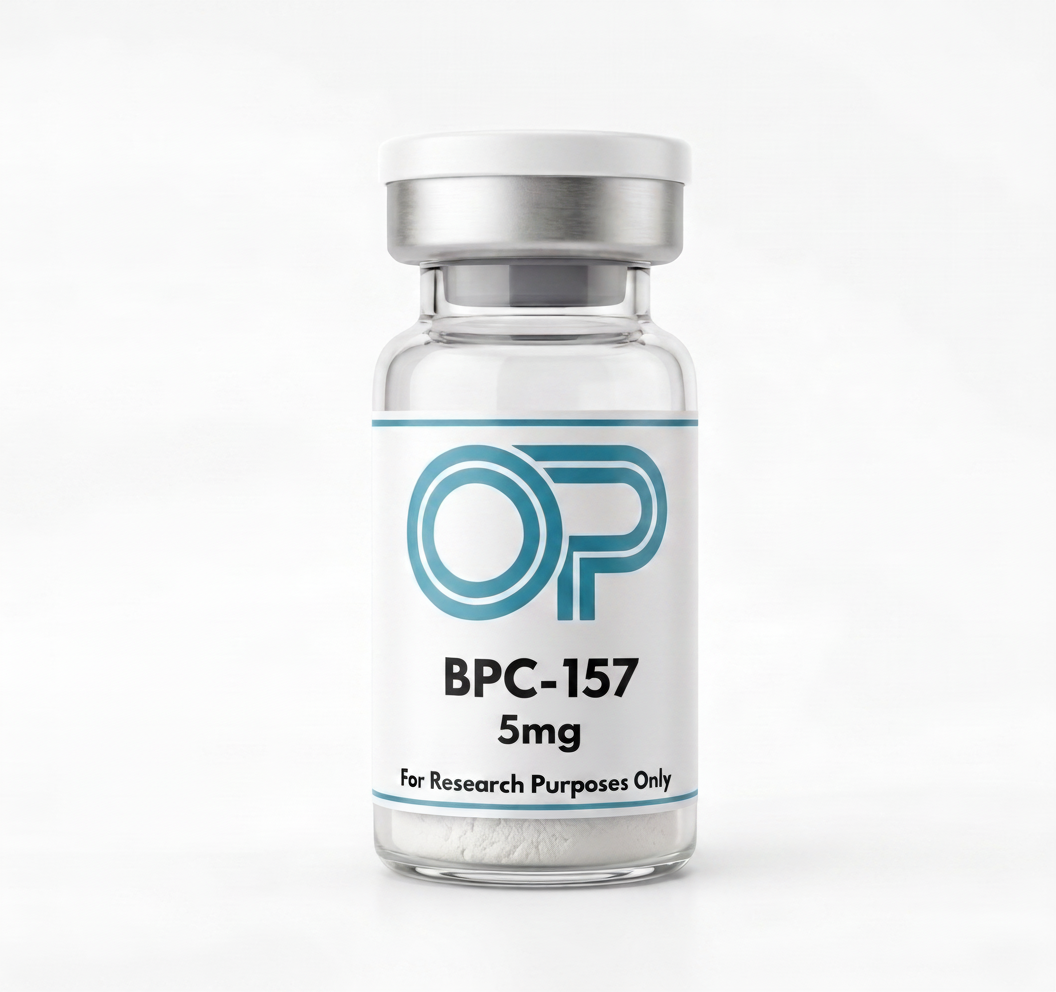
Body protection compound · Pentadecapeptide · 5mg lyophilised
≥99% Purity
CoA on release
BPC-157 is a synthetic pentadecapeptide derived from a protective sequence in human gastric juice. It is widely used in preclinical research investigating angiogenesis, tendon and ligament healing models, and gastrointestinal mucosal integrity - always in strict accordance with research-only protocols.
Size - 5mg
Supplied as 5mg lyophilised peptide per vial (single presentation).
BPC-157 (Body Protection Compound-157) is a synthetic pentadecapeptide whose sequence corresponds to a region found in human gastric juice. It has become a standard tool in regenerative and cytoprotection research because it is chemically stable, water-soluble in many formulations, and active across a wide range of preclinical injury and healing models.
Unlike large native proteins, BPC-157 is small enough for straightforward handling in cell culture and rodent studies, yet large enough to engage multiple downstream pathways that investigators associate with angiogenesis, matrix deposition, and tissue homeostasis. Optimus Peptides supplies BPC-157 strictly for lawful laboratory research - not for human or veterinary diagnosis, treatment, or prevention of disease.
Researchers often run BPC-157 alongside other regenerative peptides (for example TB-500-related fragments or GHK-Cu) to compare effect sizes, time courses, and mechanism readouts in the same model system.
Product Code
BPC-157
Class
Synthetic pentadecapeptide
Sequence Length
15 amino acids
Approx. Molecular Mass
~1,420 Da
Presentation
5mg lyophilised vial
Research Focus
Regenerative · GI · musculoskeletal models
Research Background
The peer-reviewed literature on BPC-157 is dominated by animal and in-vitro work. Across studies, common themes include:
Support for angiogenesis and microvascular density readouts in wound, tendon, and ischaemia-related models.
Effects on collagen fibre organisation and extracellular matrix turnover in connective-tissue injury paradigms.
Exploration of nitric oxide (NO) systems and growth-factor cascades (including VEGF-family signalling) as mechanistic mediators.
Neuroprotective and behavioural endpoints in selected rodent paradigms (interpretation is model-specific; not extrapolated to humans).
Research Applications
Typical investigation areas where BPC-157 appears in protocols include:
Tendon, ligament, and muscle injury–repair time-course studies
Bone healing and distraction–osteogenesis research models
Dermal wound closure, angiogenesis, and scar-matrix assays
GI mucosal injury, NSAID-toxicity, and cytoprotection models
Comparative “regenerative stack” studies versus TB-500-class fragments or copper tripeptides
Optimus Peptides does not endorse any therapeutic use. You are responsible for institutional approvals, biosafety, and jurisdictional compliance.
Technical Specifications
Appearance
White lyophilised powder
Purity
≥99% (HPLC specification)
Format
Lyophilised (freeze-dried)
Net Mass
5mg peptide per vial (label)
Reconstitution
Bacteriostatic or sterile water per protocol
Storage (Lyophilised)
−20°C, desiccated, protect from light
Storage (Reconstituted)
2–8°C; use within protocol-defined window
Shelf Life
24 months (lyophilised, unopened - refer to batch label)
CoA
Available on request per batch
Frequently Asked Questions
Is BPC-157 available to order?
Yes — 5mg lyophilised vials are in stock at each. Add to cart from this page and complete checkout. Availability can change; if a line sells through, use the notify option on the catalogue.
Is BPC-157 intended for human or veterinary use?
No. It is sold exclusively for research by qualified personnel in permitted settings. It is not an approved drug and must not be represented as safe or effective for any clinical indication.
What solvent should I use for reconstitution?
Most laboratories use bacteriostatic water (0.9% benzyl alcohol) when multidose aliquoting is required, or sterile water for injection for single-use workflows. Always follow your validated SOP and the peptide’s handling monograph.
How does BPC-157 differ from TB-500?
BPC-157 is a stable 15-mer pentadecapeptide studied broadly in GI and connective-tissue models. TB-500 usually denotes a synthetic fragment related to thymosin-β4, with emphasis on actin regulation and cell migration in repair models. Many protocols use them as comparators rather than substitutes.
Can I obtain a Certificate of Analysis?
Yes. CoA with purity and identity data is available for each batch. Contact us with your order or batch reference after purchase.