RESEARCH USE ONLY - Not for human or veterinary use. Supplied for lawful in vitro research and qualified laboratory investigation only. QUALITY - Peptide catalogue items are specified at ≥99% purity with batch documentation. Store lyophilised powders as directed before reconstitution. COMPLIANCE - You are responsible for lawful purchase, possession, and use in your jurisdiction, including institutional and safety requirements. SAFE HANDLING - Use trained personnel, appropriate PPE, and aseptic technique. Do not ingest, inject, or use outside a controlled research setting. POLICIES & ORDERS - Shipping, returns, and research-use terms apply to every order. Read our Research Use Policy and footer legal links before buying.
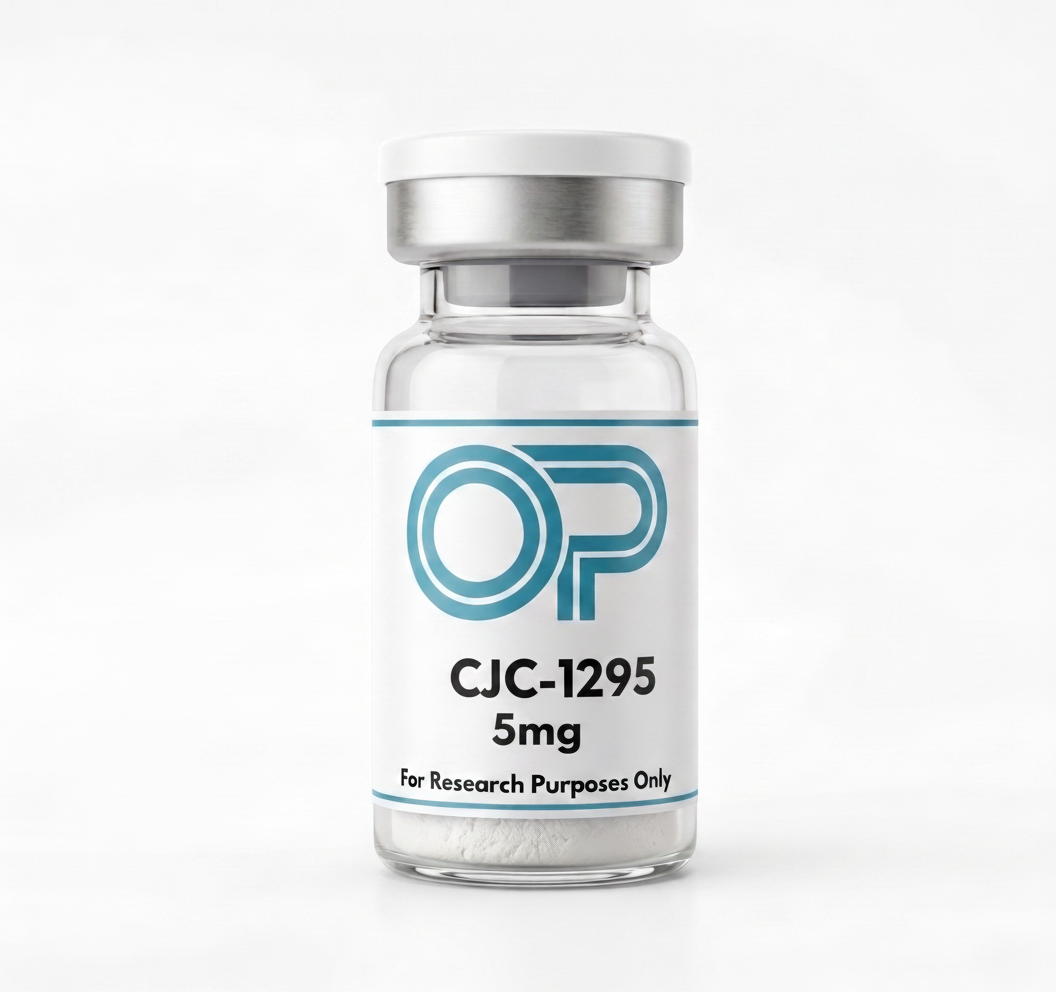
CJC-1295 5mg lyophilised vial - for research purposes only
Purity
≥99%
Format
Lyophilised
Size
5mg
Storage
−20°C
Out of stock
GHRH analogue · Secretagogue research

CJC-1295 — GHRH Analogue

Modified GHRH(1-29) analogue · 5mg lyophilised

≥99% Purity
CoA on release

CJC-1295 (without DAC) is a shortened GHRH analogue used in research on pulsatile growth hormone physiology and related signalling. For in-vitro and lawful animal research only.

This SKU is currently unavailable.

Browse other products →

What is CJC-1295 (without DAC)?

CJC-1295 refers to a synthetic analogue of the first 29 amino acids of growth hormone–releasing hormone - GHRH(1-29) - with amino-acid substitutions that improve enzymatic stability and prolong receptor engagement compared with the native fragment. The “without DAC” form omits the drug-affinity complex (maleimidoproprionic acid) extension used in certain long-acting research conjugates; many laboratories prefer the non-DAC variant for predictable pharmacokinetics in animal models.

When administered in compliant in-vivo studies, CJC-1295 classically stimulates pituitary GH release and downstream hepatic IGF-1, providing a defined probe of the hypothalamic–pituitary–somatotropic axis. Optimus Peptides supplies this peptide for research only - not for human enhancement, sport, or veterinary treatment outside approved research.

Product Code
CJC-1295
Variant
Without DAC
Target
GHRH receptor
Approx. Molecular Mass
~3.4 kDa
Presentation
5mg lyophilised vial

Research Background

Modified GHRH(1-29) analogues have been investigated for decades in GH secretagogue research. Typical published themes include:

  • Amplification of endogenous GH pulse height without pharmacological GH “flooding” from exogenous protein.
  • Interaction with somatostatin tone - many analogues show reduced sensitivity to somatostatin-mediated shutdown.
  • Comparison trials versus ghrelin-mimetic secretagogues (GHRP-6, Ipamorelin, etc.) for receptor selectivity and side-effect profiles in animals.
  • Exploration of lean mass, bone turnover, and substrate oxidation as secondary physiological readouts.

Research Applications

  • Rodent models of GH deficiency or ageing-related somatotropic decline (IACUC-approved)
  • Pituitary perfusion or perifusion systems measuring dynamic GH output
  • Receptor-binding and cAMP reporter assays for GHRH pharmacology

Technical Specifications

Appearance
White lyophilised powder
Purity
≥99% (HPLC specification)
Format
Lyophilised (freeze-dried)
Identity
CJC-1295 without DAC (confirm on CoA)
Net Mass
5mg peptide per vial (label)
Reconstitution
Bacteriostatic or sterile water per protocol
Storage (Lyophilised)
−20°C, desiccated, protect from light
Storage (Reconstituted)
2–8°C; aliquot for stability
CoA
Available on request per batch

Frequently Asked Questions

Do you sell CJC-1295 with DAC?

This catalogue line is explicitly without DAC. If your protocol requires the DAC-conjugated form, verify identity and supplier specifications before purchasing anywhere - the pharmacokinetic profile differs materially.

Can I stack CJC-1295 with Ipamorelin?

Some published rodent protocols combine a GHRH analogue with a GHRP-family ligand to synergise GH release. Such designs require scientific justification, dose rationale, and full ethical approval - not guidance for unsupervised use.

How does CJC-1295 compare to tesamorelin?

Both engage the GHRH receptor class, but they are distinct molecules with different modification patterns and published half-lives. Choose based on your model, dosing route, and historical comparator data.

When will it be back in stock?

Join the notify list on this page for email updates.